


![At a group practice, sophomore Layla Gutierrez sings, while seniors Armando Gutierrez and Jaden Cerna play the electric bass and guitar. “It’s cool being in a band with [my sister], but though we’re related, sometimes our ideas in the creative process differ and cause some conflicts,” Armando said. (@hopelesssamaritanband)](https://alisaltrojantribune.com/wp-content/uploads/2026/05/067cae3d6e7e8d0fd59cd886c8c689dbc703ed15-14-1033x1200.jpg)













At 11 years old, my biggest fear should have been the fast approaching transition into middle school. Instead, all I could think about was whether my appendix would burst because of sharp abdominal pains that felt like it could rupture at any moment.
Of course, it wasn’t really my appendix—we’ll get into that in a little bit—but because doctors assumed it was, every blood test and ultrasound looked in the wrong place. For years, the real problem went unnoticed, quietly growing inside me until it became impossible to ignore.
What I had was PCOS, which stands for Polycystic Ovary Syndrome, which is a hormonal disorder that affects how the ovaries and hormones function in the body. It can disrupt menstrual cycles, cause physical changes, and affect long-term health.
Even though it seems this is limited to the ovaries because of its name, it is a condition that affects the whole body. Some symptoms may look like normal teenage changes, hence puberty, but what many don’t really think of is that there could be something wrong. It impacts menstrual cycles, fertility, metabolism, skin condition, hair loss/growth, mood, and energy.
Irregular periods or acne are often brushed off as a typical “going through puberty” thing, so as a result, many women go years without a diagnosis. It can also increase the risk of diabetes and other long-term health issues—I’ve been told that I’m at risk for potentially getting uterine cancer.
PCOS affects roughly 1 in 10 women, and according to the World Health Organization, 70% remain undiagnosed. However, this is hardly ever talked about. Most people don’t even learn about it in health class, and it is often dismissed as just “normal irregularity” by health providers. I was only eleven when my body first tried to warn me that something was wrong. It started as a sharp, stabbing pain in my lower right abdomen. The area automatically made my parents think it could be my appendix that was causing me trouble. We rushed to get me checked, afraid it could burst (because it can happen), but every time, doctors ruled out appendicitis and sent me home. They never really gave us answers, just a “it’s not that.”
From there my body slowly changed in ways I couldn’t understand why. I had hyperpigmentation in my underarms, knees, elbows, and even my neck, which I didn’t know could mean anything, or contribute to any disorder.
My once thick, puffy hair began thinning when I was about thirteen or fourteen. At the time, we thought it could have been from depression and anxiety I experienced in late elementary and throughout middle school. But again, at this time I was still not aware that I had PCOS because most doctors I saw did not rule it a possibility. Every time the pain came back, it felt like being stabbed from the inside, it gradually became more and more relentless and unbearable. Still, no doctor could tell us why this kept happening.
By the time I was 15, after years of pain coming and going, the pain became so unbearable one night that it made me throw up and start panicking. My parents took me to the emergency room, but once again they gave me plenty of medication and sent me home.
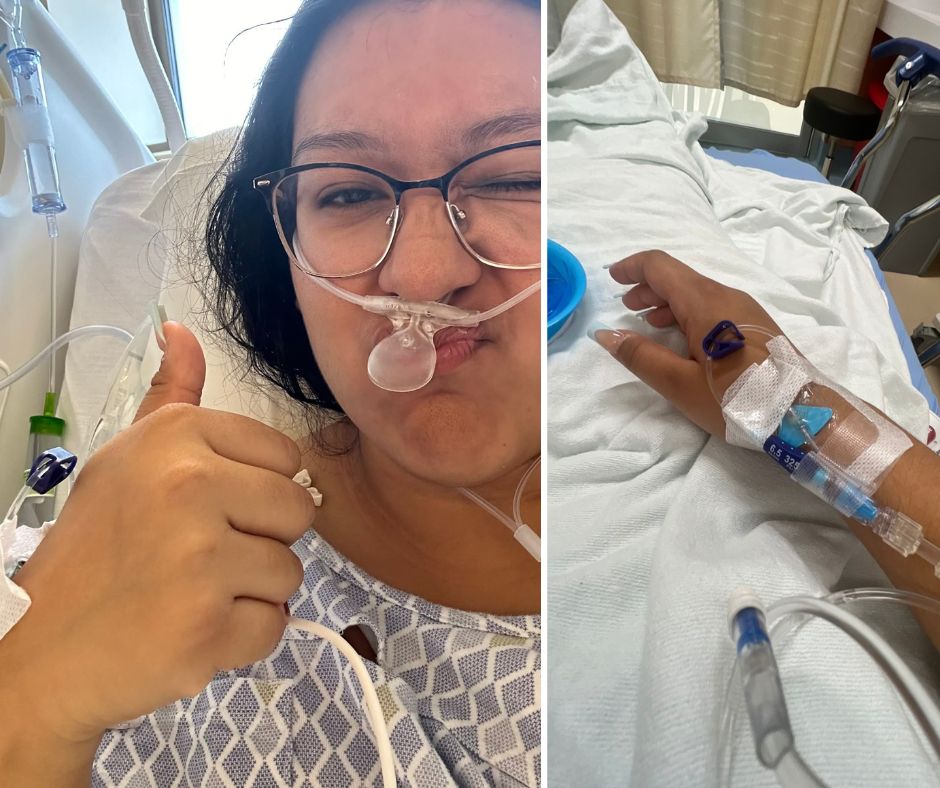
But this time, the medication didn’t work, so that night my family made the late-night drive to Stanford Hospital. We arrived around 2am. It was a tense wait with a whirlwind of tests and ultrasounds being done all night/morning, but I finally got a clear answer. An ultrasound revealed a large cyst on my ovary—it was 10cm dilated, roughly equivalent to the size of a large bagel.
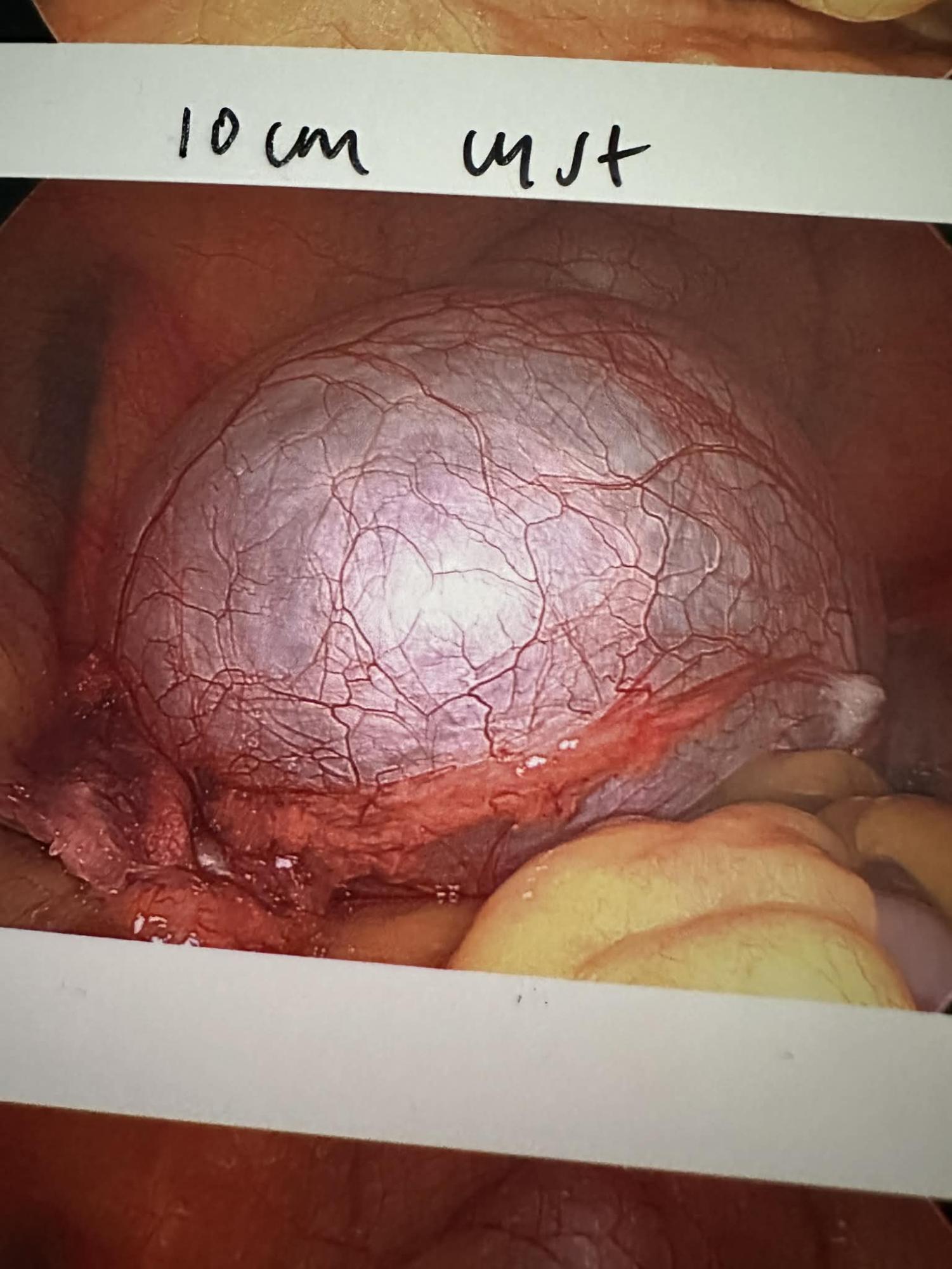
10 hours later, they rolled me into emergency surgery. This is where I say that my family went through more because what felt like a blink of an eye to me, and what should’ve been a half hour to an hour procedure (so they told us), took almost 5 hours. Though it took long, I appreciated that they didn’t have to remove my ovary or tube like they warned they might have to do.
Even though everything with surgery went great, and those specific pains went away. I still struggle with PCOS daily.
Unfortunately, my hair is still very thin, my weight is hard to take off, I’m tired even after a goodnight’s sleep, my cortisol (stress hormone) levels seem to never lower, and hyperpigmentation (dark skin patches) seem permanent.
PCOS is not rare or made-up, it is real and it affects millions of people, yet people still minimize it. It’s a hormone disorder that unless you know somebody who has it, and who is openly sharing their struggles, you practically know nothing about it. By explaining more about it, and going on about my story, I hope to be able to educate even a few people about what PCOS really is. And because some PCOS cases go unnoticed by those who have it and maybe even health providers, if something about your body feels off, don’t ignore it! Too many young women are told their symptoms are “just puberty” and sent on their way. Persistent signs like irregular or missed periods, unusual hair growth or thinning, unexplained fatigue, recurring pain, or darkened patches of skin are worth paying attention to.
For those women who may often be overlooked by the family doctor/health care provider, I highly suggest looking for an OBGYN, as mine has been very helpful. And for those simply looking for more information about PCOS, you can visit Planned Parenthood, the Office on Women’s Health, the CDC, or the National Institute of Health.

Alexis Duenas-Corona • Mar 30, 2026 at 2:43 pm
🙏
Adelaida C. • Mar 30, 2026 at 2:42 pm
We appreciate your story, Jackelyn Cisneros!!
Ruth E. • Mar 30, 2026 at 2:40 pm
Amazing writing, I am glad to have you here so that you could share your experience!