



![At a group practice, sophomore Layla Gutierrez sings, while seniors Armando Gutierrez and Jaden Cerna play the electric bass and guitar. “It’s cool being in a band with [my sister], but though we’re related, sometimes our ideas in the creative process differ and cause some conflicts,” Armando said. (@hopelesssamaritanband)](https://alisaltrojantribune.com/wp-content/uploads/2026/05/067cae3d6e7e8d0fd59cd886c8c689dbc703ed15-14-1033x1200.jpg)
















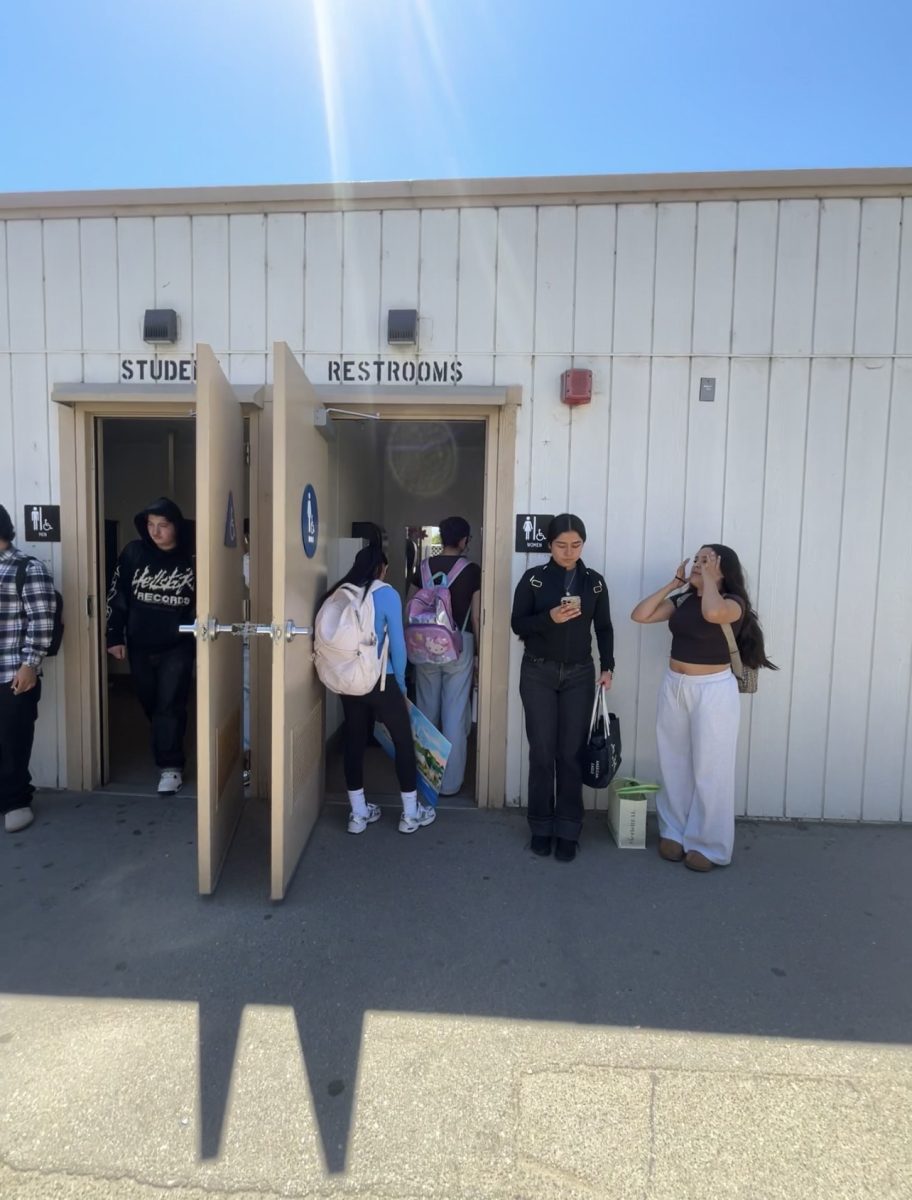
After finishing a venti Starbucks or trying to stay hydrated throughout the day, students expect using the restroom to be simple. At school, however, that basic necessity can quickly become a stressful race against the clock.
During passing periods, some girls’ restrooms feel less like restrooms and more like crowded social spaces. With only about eight minutes between classes, students needing to use the restroom are often met with lines stretching out the door before they even make it inside.
Once inside, stalls are occupied while groups of students gather around the sinks or stand in the center of the restroom. Students vape, socialize, do their makeup, or simply linger, turning what should be a quick stop into a long wait for students trying to get to class on time.
For some students, the atmosphere itself can feel uncomfortable. The smell, loud conversations, crowded sink areas, and groups gathered near entrances can make restrooms feel unwelcoming for students simply trying to use them and leave.
Assistant Principal Pedro Edeza said restroom misuse has become one of the school’s biggest day-to-day challenges. “I would say our biggest issue here at Alisal High School is that students go into the restrooms to do things they’re not supposed to,” he said.
For students who genuinely need to use the restroom, the situation creates an uncomfortable choice: wait in line and risk being late to class or leave without going and sit through class distracted and uncomfortable. Despite this, tardies caused by restroom delays are rarely excused, even though the situation is often outside of students’ control. Over time, repeated tardies can negatively affect attendance records and classroom perceptions, even when students were simply trying to meet a basic need responsibly.
Although some students try to avoid the issue by going during class time instead, that solution is not always realistic. Many teachers limit restroom passes during instruction because of repeated restroom misuse throughout campus. Others only allow one student out at a time or discourage students from leaving class frequently, leaving many students relying on already crowded passing periods.
English teacher (and newspaper/yearbook adviser) Mick Battaglini is sympathetic, to a degree. “I would rather have students get to class on time, than be late because they went to the bathroom,” he said. “I understand it’s difficult and I allow students to go to the bathroom during class, I just want them to go and come back quickly.”
The issue becomes more complicated because of the school’s size and limited supervision. According to administration, the campus currently has 10 supervisors (4 females and 6 males) in addition to one detention specialist responsible for monitoring more than 2,500 students and multiple restroom areas across campus.
Supervisors regularly check restrooms every five to 10 minutes for overcrowding, vandalism, smoking, and other issues, but coverage gaps still exist. During instructional time, supervisors are often stationed near certain restroom areas to discourage restroom misuse, respond to safety concerns, and monitor high-traffic locations throughout campus.
“We don’t have enough campus supervisors to cover all the restrooms,” Edeza said. “Some restrooms have partial coverage because the individuals covering them have larger areas to supervise.”
The challenge is not limited to overcrowding alone. According to Edeza, students often move toward less-monitored restrooms once supervision increases in certain areas, forcing staff to constantly shift coverage throughout the day.
High-frequency areas currently include the 1000s, main building, finance, and baile restrooms. “It’s very challenging to ensure only a certain amount of students are in the restrooms at a time,” Edeza said. “When students are in large numbers, their behaviors and attitudes change and they become a lot more defiant.”
Smoking and overcrowding also contribute to another ongoing issue: restroom damage. Administrators say vandalism, clogged toilets, broken partitions, graffiti, and trash thrown into urinals frequently force restrooms to temporarily shut down for cleaning or repairs.
“When we need to shut down a restroom, students get diverted to other restrooms, which leads to larger numbers trying to access the restrooms that are available,” Edeza said.
Those closures place additional pressure on already crowded restrooms while also creating extra work for custodial staff. According to administration, custodians are often pulled away from regular maintenance and deep cleaning to respond to intentional damage and daily restroom misuse.
Some students feel the issue is not always fully understood by staff members because teachers and faculty have access to separate staff restrooms that students cannot use.
However, administrators say efforts to improve supervision have increased over the last several years. “In the last couple of years we actually went from like four or five supervisors to 10,” Edeza said. “We’re working and making small adjustments to make improvements.”
Rather than placing supervisors permanently inside every restroom, a more realistic approach may involve increasing supervision during the busiest passing periods in the highest-traffic areas.
Temporary monitoring during those key eight minutes could help reduce vaping, discourage students from gathering in large groups, and allow students who genuinely need the restroom to move through more efficiently before class begins.
The issue highlights a larger challenge schools face in balancing student safety, accessibility, supervision, and limited staffing. While administration continues adjusting coverage based on student behavior patterns, many students still feel frustrated by a system where responsibly using the restroom during passing periods can become difficult on a daily basis.
At its core, the issue is not simply about vaping or students gathering in restrooms. It is about access. Students should not have to choose between getting to class on time and meeting a basic need.