


![At a group practice, sophomore Layla Gutierrez sings, while seniors Armando Gutierrez and Jaden Cerna play the electric bass and guitar. “It’s cool being in a band with [my sister], but though we’re related, sometimes our ideas in the creative process differ and cause some conflicts,” Armando said. (@hopelesssamaritanband)](https://alisaltrojantribune.com/wp-content/uploads/2026/05/067cae3d6e7e8d0fd59cd886c8c689dbc703ed15-14-1033x1200.jpg)













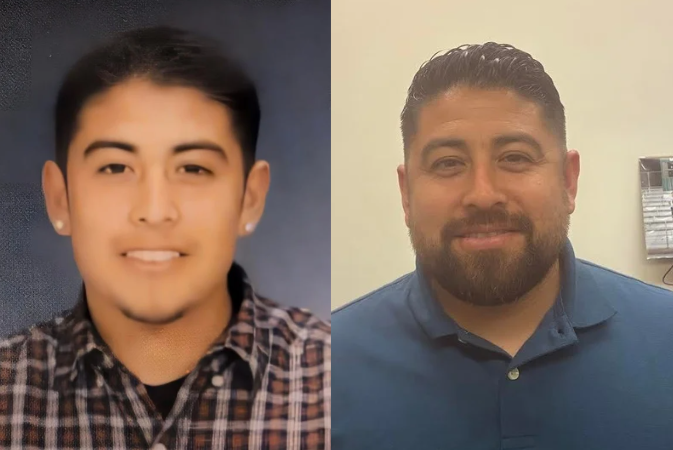
Taking the load of all the stress behind the scenes, counselor Anthony Avitia is packed to the brim with meetings and appointments. He, along with the other counselors, plays a vital role in navigating students to the right path; helping them set up the courses they need to ensure their success and guiding them to their career path. Aside from academic guidance, he gets students the help they need by providing them resources based on personal needs.
As a graduate from class of 1992, Avitia remembers fun memories from his time as a student. “We were definitely a spirited school,” Avitia said. “The class competitions were really really intense.” With yearly competitions for the most spirited class, Avitia’s class dominated, winning the trophy 3 times. Friends made school very fun and since he was in sports, he made great memories. “I have very fun memories of going to football games, going to basketball games,” he said.
He played football and baseball for all four years. He was also in the College Career Curriculum, a support group for students to go to college, similar to AVID. “It got me thinking about college seriously for the first time,” he said. “I had ideas of it, but I wasn’t sure about the process or how to get there.”
After graduating, he left Salinas, going to Wabash College in Indiana, a liberal arts school. A teacher of his, Patrick Egan, had connections to the school so he introduced him, as well as other students, to the school throughout different years.
His friend, Ernesto Vela, who was a year older than him and is now Assistant Superintendent for the county, went to Wabash. Upon his return, Vela talked about his experience. “He came back after his freshman year of college really talking about the experience and got me even more interested in going out there as well,” Vela said.
He ended up liking how the population was very small, with all male students, and a really good financial aid package. Since it was a good deal, he decided to take the opportunity. However, he was the minority. “I would say my college was maybe 95% white, about 2% African American, about 2% other, and maybe 1% Latino,” he said.
The culture shock he experienced while in college, as well as being a very small minority, influenced him to take Spanish with a history minor in order to connect more with his culture.
Although it provided him with education, he left Indiana because he didn’t see himself living there long term. “I knew I wanted to come back home to the West Coast,” he said. “I traveled a lot.”
Avitia moved from place to place throughout the West Coast, living temporarily in Seattle, Arizona, and in the Bay Area, until he got the teaching opportunity at El Sausal.
After graduating from Wabash in 1996, he took in many jobs before deciding to become a teacher. He enjoyed working with communities and giving back because of his experience in Salinas and at college. “I worked for a literacy program in the Bay Area in Redwood City,” he said.
Starting at this literacy program, he then continued moving from place to place, working in different social work. He worked at the first program for 4 years, then moved to Arizona and worked at an agency similar to CPS for a year, then moved back to San Jose, working for the Muscular Dystrophy Association for one year, running a clinic and working with families in support groups for children with muscular dystrophy.
Eventually, a friend of his, Mr. Poland, who taught at El Sausal, connected him to the principal, to work with ELD (English Language Development) students for a couple months then came back as a migrant counselor.
He taught ELD 1 for half a semester, helping students who arrived from Mexico. After that he became a migrant resource teacher in which he provided students with resources they needed. After that, he taught a Spanish elective class, which he described as more of a Spanish literature class. “I really focused on different types of books, and with my experience in terms of the history part of it, the literature part of it, things I really enjoyed, I tried to really go over those types of things,” Avitia said.
It was great with many students coming in, but he didn’t feel passionate about it. He also realized that his favorite part of it was connecting with the students when they talked. “I liked having deeper conversations with students,” he said.
When he transferred to Alisal, in 2006, he started with the Credit Recovery Program for 2 years. He was a part of that before it became Edgenuity, the online program to recover credits. He talked to a few people who were counselors and decided to become a counselor.
After college, anyone who wants to become a counselor can get a PPS (Pupil Personnel Services) credential. Avitia was in the PPS program when he came over to Alisal.
He graduated from San Jose State with a PPS credential, allowing him to be a high school counselor. Since he hadn’t fully committed to the teaching program, he was able to change to a counseling program, making it an easy switch. Typically it takes about 2 years to complete the program, but he took 4 years to complete it. “[I] didn’t take as many classes as I should’ve,” he said.
Since he went to El Sausal and Alisal, it was a perfect fit for him to come back to Alisal as a counselor starting in 2008. Coming back, he felt good about working with people who previously were his teachers since he enjoyed talking with them about his time at Alisal.
He still refers to Ms. Albano as “Ms.” and is not on a first name basis with her. “To hear their stories of what I was like as a student when I was here was pretty cool too, … not always great but pretty cool,” Avitia said.
A big difference he noted was the involvement of social media in student’s lives, with some using it for both good and bad things.
He connected social media to decreased school spirit. “In my time here there seemed to be a lot more spirit and cohesiveness as a class,” Avitia said. “That’s hard sometimes when I see our rallies and they’re not always full sometimes or maxed out,” he said.
Despite the decline in school spirit, he still considers Alisal his home because it unites a lot of people, making a big community.